exam preparation Archives - Wise Ways to Study – Study Tips, Learning Techniques & Student Success

Tag: exam preparation

  • The Ultimate Study Tips Guide: Master Your Learning Process

    The Ultimate Study Tips Guide: Master Your Learning Process

    Unlock Academic Success with the Ultimate Study Tips Guide

    Navigating the world of academics can be challenging, but with the right strategies, you can maximize your learning potential and achieve your goals. This study tips guide is designed to help students of all levels—whether you are in high school, college, or pursuing lifelong learning. Discover actionable advice, effective study methods, and productivity hacks to transform the way you learn.

    Student studying with books and laptop

    Why Study Tips Matter

    Effective study habits are the foundation of academic excellence. Implementing smart learning strategies helps you retain information, manage stress, and improve your grades. Whether you’re preparing for standardized tests, final exams, or daily assignments, this study tips guide will help you unlock your true potential.

    Creating the Perfect Study Environment

    • Choose a Quiet Space: Find a location with minimal distractions to enhance concentration.
    • Organize Your Materials: Keep your textbooks, notes, and stationery within reach.
    • Comfort is Key: Use a comfortable chair and ensure good lighting to reduce fatigue.
    • Limit Digital Distractions: Silence notifications or use apps that block social media during study sessions.

    Organized study desk with supplies

    Top Effective Study Techniques

    Not all study methods are created equal. Here are proven techniques to help you absorb and recall information more efficiently:

    1. Active Recall: Test yourself regularly instead of passively reading through notes.
    2. Spaced Repetition: Spread out your study sessions over days or weeks to improve retention.
    3. Pomodoro Technique: Study in short, focused intervals (e.g., 25 minutes), followed by a 5-minute break.
    4. Mind Mapping: Visualize complex topics by creating diagrams that connect ideas and concepts.
    5. Summarization: Write summaries of what you’ve learned to reinforce understanding.
    6. Group Study: Discussing topics with peers helps clarify doubts and boost memory recall.

    “The secret of getting ahead is getting started.” – Mark Twain

    Time Management and Organization

    Juggling multiple subjects and deadlines can be overwhelming. Here are some study tips for time management:

    • Set SMART Goals: Be Specific, Measurable, Achievable, Relevant, and Time-bound.
    • Use Planners or Digital Tools: Schedule study sessions, assignments, and breaks.
    • Prioritize Tasks: Focus on high-impact assignments and break larger tasks into manageable chunks.
    • Stay Consistent: Build a routine for daily or weekly study sessions.

    Student using planner and digital calendar

    Boosting Motivation and Focus

    Staying motivated can be tough, especially during demanding periods. To maintain your drive and focus:

    • Set Clear Objectives: Know why you’re studying and keep your goals visible.
    • Reward Yourself: Celebrate small wins to stay encouraged.
    • Take Regular Breaks: Short breaks refresh your mind and prevent burnout.
    • Practice Mindfulness: Techniques like meditation or deep breathing can improve concentration.

    Exam Preparation Made Easy

    Exams can be stressful, but the right preparation strategies can ease anxiety and boost performance:

    1. Start Early: Avoid cramming by beginning revision weeks in advance.
    2. Practice Past Papers: Familiarize yourself with exam formats and key question types.
    3. Review Mistakes: Learn from errors to avoid repeating them.
    4. Create Cheat Sheets: Summarize formulas, dates, or key concepts for quick review.
    5. Stay Positive: Maintain a growth mindset and believe in your ability to succeed.

    Healthy Habits for Better Learning

    Academic success isn’t just about hitting the books. Incorporate these healthy habits to enhance memory, focus, and overall well-being:

    • Get Enough Sleep: Aim for 7-9 hours per night to boost cognitive function.
    • Eat Nutritious Foods: Fuel your brain with balanced meals and stay hydrated.
    • Exercise Regularly: Physical activity increases energy levels and reduces stress.
    • Stay Connected: Maintain supportive relationships with family and friends to keep morale high.

    Conclusion: Your Roadmap to Academic Success

    With these practical study tips and proven strategies, you’re well on your way to mastering any subject. Remember, consistency and a positive mindset are key. Implement these techniques, adjust them to fit your learning style, and watch your academic performance soar. Let this study tips guide be your companion on the journey to lifelong learning and achievement!

  • The Benefits of Mind Mapping for Studying Apps: Unlocking Academic Success Through Visual Learning

    The Benefits of Mind Mapping for Studying Apps: Unlocking Academic Success Through Visual Learning

    The Benefits of Mind Mapping for Studying Apps: Unlocking Academic Success Through Visual Learning

    As technology has become an integral part of education, studying apps play a pivotal role in helping students organize, retain, and efficiently recall information. Among the powerful tools available in this digital age, mind mapping stands out as a highly effective strategy for boosting comprehension and productivity. In this article, we’ll explore the many benefits of mind mapping for studying apps, using related keywords such as visual note-taking, memory enhancement, learning organization, conceptual mapping, and more. Read on to discover why integrating mind maps into your academic toolkit could be transformative.


    Digital mind map displayed on a tablet with colorful branches connecting ideas

    What Is Mind Mapping?

    Mind mapping is a technique used to visually organize information, making it easier to understand and remember. Unlike traditional linear notes, mind maps use branching structures that imitate the way the brain naturally processes and associates information. By connecting ideas through central topics, subtopics, keywords, and images, students can efficiently categorize and retrieve knowledge. Studying apps that offer mind mapping functionalities allow learners to create digital maps, making organization even more interactive and accessible.

    Enhancing Memory Retention with Mind Maps

    One of the primary advantages of mind mapping in studying apps is the ability to enhance memory retention. The use of images, colors, and spatial organization appeals to our visual memory. Key concepts are more readily recalled because they’ve been encoded as visual patterns. This method transforms rote memorization into an engaging learning process. In student-focused apps, features like color coding, symbol integration, and multimedia attachments strengthen these memory pathways further.

    Student using a mind mapping app to review course material on a laptop

    Boosting Creativity and Critical Thinking

    Mind mapping encourages creative problem-solving and critical thinking. As students visually break down complex topics into manageable parts, they reveal hidden connections between concepts. This is especially useful for subjects that require analysis, such as literature or science. Studying apps with mind map capabilities often come with templates and customizable options, which help students craft unique diagrams reflecting their personal learning style. This flexibility supports brainstorming and idea generation for essays, projects, and exam preparation.

    Organizing Complex Information Efficiently

    Students are frequently overwhelmed by vast courses with intricate details. Mind mapping simplifies this challenge. By centralizing main ideas and linking layers of supporting information, learners can see the “big picture” while quickly accessing finer details. Studying apps with dynamic mind mapping features enable easy editing, expansion, and rearrangement of nodes, making them ideal for collaborative study sessions and ongoing project management.

    Accessibility and Collaboration in Digital Mind Mapping

    Unlike paper-based notes, digital mind maps are easily shareable and collaborative. Most studying apps allow syncing across devices, cloud storage, and real-time group editing. This access promotes teamwork, idea sharing, and feedback among peers or teachers. Furthermore, students with diverse learning needs benefit from voice note integration, text-to-speech, and image import features, which are increasingly common in modern mind mapping applications.

    Increased Focus and Motivation

    Staying focused can be a struggle, particularly with dense academic materials. The interactive nature of mind maps in study apps boosts engagement, turning passive reading into an active creation process. Building and reviewing mind maps feels rewarding—checking off completed branches acts as a motivator, while the visual overview reduces stress and overwhelm. This keeps students inspired to persist with their studies.

    Time Management and Exam Preparation

    A well-structured mind map reduces the time spent searching through disorganized notes. By providing a visual roadmap of course content, mind mapping apps make identifying knowledge gaps and reviewing key topics for exams quick and efficient. Many apps even allow you to export your maps for printouts or to integrate with calendars and task trackers, making them valuable for revision planning and time management.

    Integrating Mind Mapping into Your Study Routine

    • Start With a Central Idea: Define your map’s purpose—be it an exam topic, a course, or a broad concept.
    • Branch Out: Add subtopics and supporting details using keywords and short phrases.
    • Use Visuals: Incorporate icons, images, and colors to make your map memorable.
    • Review and Revise: Regularly update your mind maps as your understanding grows.
    • Collaborate: Share your maps with classmates to compare approaches and build on each other’s ideas.

    Explore studying apps that support mind mapping such as XMind, MindMeister, and SimpleMind to find the best fit for your workflow.

    Conclusion: Empower Your Learning with Mind Mapping for Studying Apps

    The benefits of mind mapping for studying apps are wide-reaching. Whether you’re preparing for exams, tackling complex assignments, or brainstorming creative projects, visual mapping tools simplify information management, deepen understanding, and make learning more fun. Embrace this digital study solution to unlock your academic potential and transform your approach to knowledge.

  • Unlocking Results: How to Create an Effective Flashcard Studying Routine

    Unlocking Results: How to Create an Effective Flashcard Studying Routine

    Introduction

    In today’s fast-paced learning environment, mastering new information efficiently is crucial. If you’re looking to optimize your study sessions and improve long-term memory retention, implementing a thoughtful routine for studying with flashcards effectively is one of the best strategies available. Flashcards are more than just quick review tools—they tap into proven cognitive principles such as active recall, spaced repetition, and metacognitive reflection, making them ideal for learners of all ages and disciplines.

    Student holding colorful flashcards while studying at a desk

    Why Flashcards Work—The Science

    Flashcards excel because they stimulate active engagement with material. Unlike passive reading, using flashcards forces your brain to retrieve information, building stronger neural connections. This is called active recall. Moreover, incorporating spaced repetition—reviewing flashcards at increasing intervals—greatly improves your ability to retain knowledge over time. These cognitive science-backed methods have helped countless students and professionals achieve top performance.

    Related Concepts for Effective Study Sessions

    • Efficient learning with spaced intervals
    • Active memory techniques
    • Retention strategies for exams
    • Self-testing with question-and-answer methods
    • Personalized flashcard organization

    Building Your Flashcard Study Routine

    To maximize results, a dedicated routine is essential. Here’s a step-by-step template for organizing and executing productive sessions:

    1. Create High-Quality Flashcards

    • Use clear, simple questions and concise answers
    • Include keywords and examples
    • Mix in images or diagrams for visual memory
    • Make cards by hand or digitally (apps like Anki or Quizlet offer feature-rich designs)

    2. Organize Flashcards by Topic and Difficulty

    Separate your study materials into logical categories. Use colored cards, tabs, or digital decks for each subject or theme. Also, set aside cards that you find challenging for targeted review.

    3. Implement Spaced Repetition Scheduling

    Review new cards daily, but gradually increase the intervals between reviews of familiar flashcards. Digital platforms automate this, but even physical cards can be organized into piles based on mastery: review difficult cards often and mastered cards less frequently.

    Chart illustrating spaced repetition with three piles of flashcards at different review intervals

    4. Use Active Recall and Self-Testing

    Before flipping to check your answer, pause and try to recall the information. Speaking answers aloud or writing them down engages additional senses, cementing learning.

    5. Track Progress and Reflect

    Periodically shuffle your deck and attempt mock quizzes. Note which areas improve and which need extra attention. Reflection is crucial: consider keeping a simple journal or checklist to log which decks or subjects you reviewed, making your progress visible and motivating.

    Designing Flashcards for Engagement

    A thoughtful design can make studying less monotonous and more memorable. Use:

    • Bold text or highlights for vital terms
    • Relevant images or mnemonics
    • Multiple-choice or fill-in-the-blank cards for variety
    • Occasional humor or fun facts to keep morale high

    Assorted flashcards with drawings and colorful highlights

    Advanced Flashcard Tactics

    • Interleaving: Mix subjects during a session to improve flexible thinking.
    • Peer Quizzing: Team up with a friend and quiz each other using your decks. Teaching others reinforces your own knowledge.
    • The Leitner System: A tiered box system for sorting flashcards based on how well you know them, automating your review intervals.

    Common Pitfalls and How to Prevent Them

    • Cramming: Avoid last-minute, marathon sessions. Stick to your spaced routine for best results.
    • Overloading: Don’t create overly dense cards. Simplicity enhances recall.
    • Passive Review: Simply flipping through cards without effortful retrieval is far less effective than self-quizzing.
    • Ignoring Missed Cards: Revisit and analyze errors—they’re valuable learning opportunities!

    Making Flashcards a Habit

    Consistency is more important than marathon sessions. Here are tips for seamless integration:

    • Review flashcards at regular times—after breakfast or before bed, for example
    • Carry a small deck or use a mobile app to study in brief downtimes
    • Pair flashcard review with another habit (e.g., a cup of tea or a walk)
    • Set tangible goals, such as “review 30 cards a day”

    Conclusion: Unlock Your Learning Potential

    A routine built on effective flashcard strategies turns study time into real learning. Whether preparing for exams, mastering a language, or acquiring new professional skills, an intentional approach combining active recall, spaced repetition, and regular self-testing will drive long-term results. Make flashcard review a regular, low-pressure part of your daily life for both efficiency and confidence in your memory.

    Ready to transform your studies?

    Start building your personalized routine for studying with flashcards effectively today and enjoy deeper understanding with less stress. Share your progress or favorite tips in the comments below!

  • How to Prepare for Finals Week: The Ultimate Guide for Academic Success

    How to Prepare for Finals Week: The Ultimate Guide for Academic Success

    Introduction: Navigating Finals Week Successfully

    Finals week can be an overwhelming period for college students and high school learners alike. The pressure to perform well, manage multiple deadlines, and retain vast amounts of information often leads to stress and anxiety. However, with the right strategies and mindset, you can conquer your exams and finish the semester strong. In this comprehensive guide, we’ll explore actionable tips on how to prepare for finals week, including effective study techniques, organization methods, stress management, and maximizing productivity.

    students studying together in library

    Create a Personalized Study Plan

    The cornerstone of finals week success is a well-organized study schedule tailored to your academic needs. Begin by reviewing your syllabi and listing all exams, assignments, and deadlines. Use a calendar or planner to map out your study sessions, allocating more time to challenging subjects. Setting realistic goals and priorities will help you stay on track and avoid last-minute cramming.

    • Time management: Allocate blocks of time for each subject. Use time management strategies such as the Pomodoro technique to maintain focus.
    • Break tasks down: Divide large topics into manageable chunks to prevent feeling overwhelmed.
    • Prioritize: Focus on high-impact tasks and subjects that need more attention.

    organized study plan with color-coded calendar

    Organize Your Study Materials

    Having all your materials in order is crucial for efficient studying. Gather lecture notes, textbooks, handouts, and any online resources you’ll need. Consider creating digital folders for each subject, and use apps or sticky notes to highlight important concepts.

    • Flashcards: Create flashcards for key terms and concepts. Digital apps like Anki or Quizlet can be useful.
    • Summaries: Write brief summaries for each chapter or topic. This aids retention and quick review.
    • Mind maps: Visualize complex information to see connections and relationships.

    “Organization is the key to unlocking your academic potential during finals week.”

    Effective Study Techniques for Finals Preparation

    Not all study methods are created equal. Adopt evidence-based strategies to enhance your learning and retention:

    • Active recall: Test yourself frequently on material rather than passively rereading notes.
    • Spaced repetition: Review information at intervals to strengthen memory.
    • Practice exams: Take mock tests under timed conditions to simulate the real exam.
    • Group study: Collaborate with classmates to discuss and clarify concepts.
    • Mnemonic devices: Use acronyms, rhymes, and visual cues to remember details.

    Optimize Your Study Environment

    Where you study matters. Create a distraction-free space that encourages focus and productivity. Ensure your study area is well-lit, comfortable, and free from unnecessary interruptions.

    • Minimize distractions: Turn off notifications and keep your phone out of reach.
    • Supplies: Keep all necessary materials within arm’s reach.
    • Ambience: Use background music or white noise if it helps you concentrate.

    quiet study desk with books and laptop

    Managing Stress and Practicing Self-Care

    Finals week is taxing, both mentally and physically. It’s important to take care of your wellbeing to perform at your best.

    • Sleep: Aim for 7-9 hours of sleep each night. Avoid all-nighters, as sleep deprivation impairs memory and concentration.
    • Nutrition: Eat balanced meals with plenty of fruits, vegetables, and protein. Stay hydrated!
    • Physical activity: Incorporate movement breaks, stretching, or light exercise to reduce stress.
    • Mindfulness: Practice meditation or deep breathing exercises to calm anxiety.

    “Self-care is not a luxury—it’s essential for academic performance.”

    Maximize Productivity During Finals Week

    Staying productive is about working smarter, not harder. Use productivity hacks to make the most of your study time.

    • Set specific goals: Define clear objectives for each study session.
    • Schedule breaks: Take regular breaks to recharge—short walks, snacks, or quick chats with friends.
    • Eliminate multitasking: Focus on one task at a time for better results.
    • Track progress: Mark completed topics to stay motivated.

    Preparing for Exam Day

    The night before your final, review key points and avoid cramming. Prepare your materials, set an alarm, and ensure you know the location and timing of your exam. On test day, eat a nourishing breakfast, arrive early, and stay calm.

    • Checklist: Bring all required supplies—pencils, calculator, ID, and water bottle.
    • Positive mindset: Affirm your preparation and visualize success.
    • Manage time: Read instructions carefully and budget your time during the test.

    Conclusion: Your Finals Week Success Blueprint

    Preparing for finals week doesn’t have to be daunting. With strategic planning, effective study methods, and self-care, you can approach your exams with confidence and achieve academic success. Remember, it’s not just about working hard—it’s about working smart and maintaining balance. Good luck!

    Related Topics and LSI Keywords

    • finals week survival tips
    • study strategies for exams
    • exam preparation guide
    • stress management during finals
    • productive study habits
    • test day anxiety relief
    • academic success tips
    • college student finals week
    • how to study effectively
    • time management for students
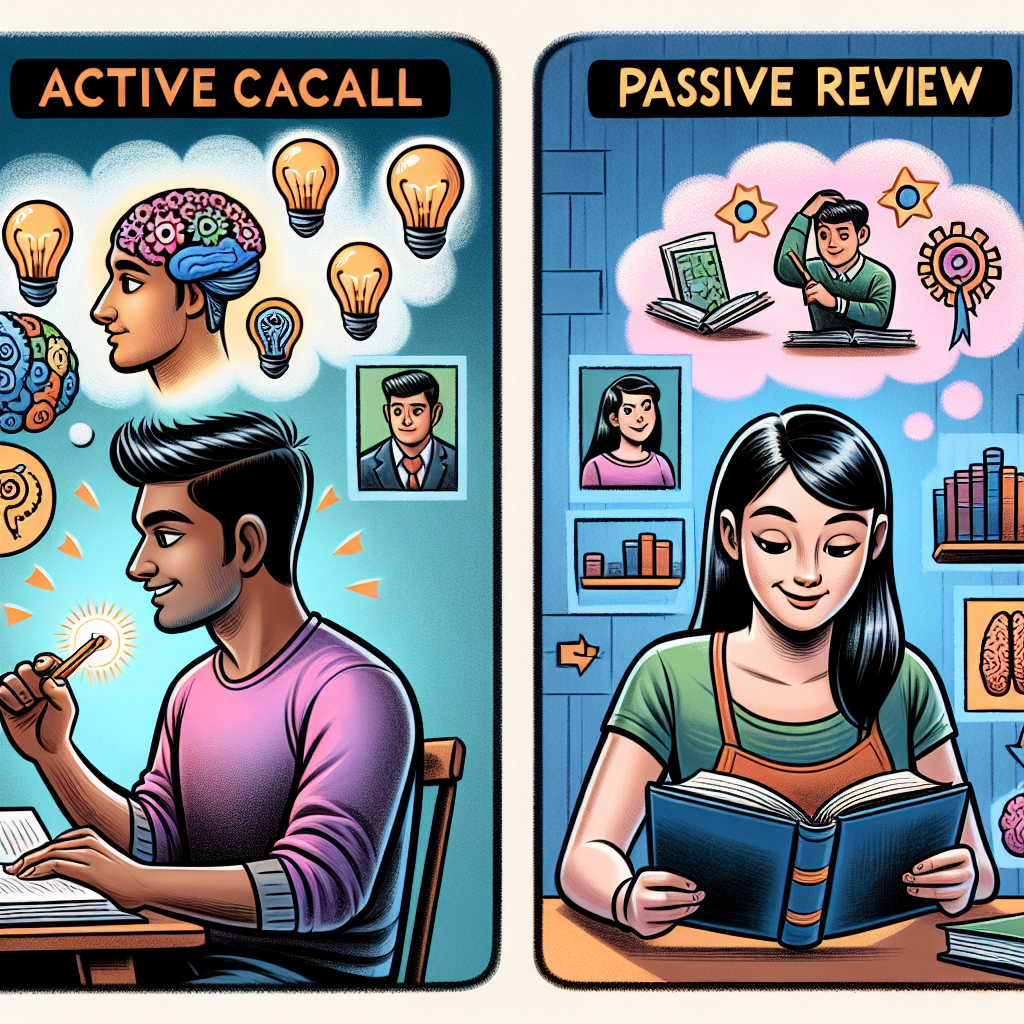
  • Active Recall vs Passive Review Strategies: Unlocking Powerful Learning Methods

    Active Recall vs Passive Review Strategies: Unlocking Powerful Learning Methods

    Active Recall vs Passive Review Strategies: Which Learning Method Wins?

    In the world of effective learning, active recall and passive review strategies stand as two contrasting approaches. Whether you are a student striving for academic excellence, a professional preparing for certification exams, or an autodidact committed to lifelong learning, understanding the differences between these methods is essential for optimal knowledge retention and academic performance. This comprehensive guide will explore the definitions, benefits, drawbacks, and practical applications of both active recall and passive review, helping you to unlock your full learning potential.

    Young student using flashcards for active recall at a desk

    What is Active Recall?

    Active recall is a cognitive science-backed learning technique that involves actively stimulating your memory during the learning process. Instead of passively reviewing materials, you test yourself on the information you need to remember, forcing your brain to retrieve and reconstruct knowledge. This process strengthens neural connections and enhances long-term memory retention.

    • Definition: Actively trying to remember information without looking at the source material.
    • Examples: Flashcards, self-quizzing, practice tests, closed-book recall, spaced repetition.
    • Key Benefits: Improved retention, deeper understanding, and increased exam performance.

    Understanding Passive Review Strategies

    Passive review strategies involve exposing yourself to learning materials without actively engaging with them. This could mean rereading textbooks, watching lectures, highlighting notes, or listening to audio recordings. While these methods can introduce familiarity with the content, they often fail to create the strong memory traces necessary for long-term retention.

    • Definition: Learning by reviewing material without forcing the brain to retrieve information.
    • Examples: Rereading notes, highlighting, watching recorded classes, listening to podcasts.
    • Key Drawbacks: Lower retention rates, illusion of competence, superficial understanding.

    Student passively reviewing textbook notes with highlights

    Comparing Active Recall and Passive Review Strategies

    Aspect Active Recall Passive Review
    Engagement High – requires active mental effort Low – mainly exposure to content
    Retention Significantly improves long-term memory Often leads to rapid forgetting
    Efficiency More effective in less time Requires more time with less benefit
    Examples Flashcards, practice tests, self-quizzing Rereading, highlighting, listening
    Neuroscience Basis Strengthens neural pathways through retrieval practice Minimal impact on neural consolidation

    Why Does Active Recall Work?

    According to cognitive psychology, retrieval practice forms the cornerstone of efficient learning. When you force your brain to recall information, you are not just assessing your memory — you are actively strengthening it. This process, known as the testing effect, has been shown in multiple studies to dramatically improve long-term retention. Conversely, passive learning creates a false sense of mastery, as recognizing information is much easier than recalling it from scratch.

    Brain illustration showing neural pathways during active recall practice

    How to Implement Active Recall in Your Study Routine

    1. Use Flashcards: Create digital or physical flashcards with questions on one side and answers on the other. Apps like Anki or Quizlet utilize spaced repetition algorithms to optimize review intervals.
    2. Practice Self-Testing: After studying a topic, close your materials and write down everything you remember. Check your recall against your notes and fill in gaps.
    3. Teach Someone Else: Explaining concepts aloud to a peer or even to yourself forces active engagement and reveals areas needing review.
    4. Use Practice Questions: Complete end-of-chapter questions or generate your own based on the material.
    5. Apply Spaced Repetition: Review information at increasing intervals to combat the forgetting curve and solidify knowledge.

    Is There a Place for Passive Review?

    While active recall trumps passive strategies for deep learning, passive review can still play a supportive role. For example, skimming material before a lecture can provide a helpful overview, and reviewing highlighted notes may refresh your memory before a test. However, passive review should not be your primary study method if your goal is long-term understanding and exam success.

    Combining Active Recall and Passive Review for Optimal Results

    The most effective learners combine both strategies. Begin with passive review to familiarize yourself with new material, then transition to active recall techniques to reinforce and test your understanding. This blended approach leverages the strengths of both methods, ensuring both breadth and depth in your learning.

    Conclusion: Make Active Recall Your Learning Superpower

    In the battle of active recall vs passive review strategies, active recall emerges as the superior method for robust learning, retention, and academic achievement. By consistently challenging your brain to retrieve information, you build stronger memory traces and set yourself up for long-term success. Remember, knowledge is not just about exposure — it is about engagement. Transform your study routine today by embracing the power of active recall.

  • How to Stay Focused While Studying: Effective Strategies for Students

    How to Stay Focused While Studying: Effective Strategies for Students

    Introduction: The Challenge of Maintaining Focus While Studying

    Staying focused while studying is a common struggle for students of all ages. With distractions from smartphones, social media, and even our own wandering thoughts, it can be difficult to concentrate and absorb information efficiently. In this comprehensive guide, we’ll explore practical strategies to boost your concentration, create a productive study environment, and maximize your academic performance. Whether you’re preparing for exams, working on assignments, or learning a new subject, these techniques will help you enhance your attention span and achieve your goals.

    Student studying with focus in a clean, organized environment

    Understanding Focus: What Distracts Us and Why?

    Focus is the ability to direct your attention to a specific task or activity, resisting the urge to respond to external and internal distractions. Many factors can impact your ability to concentrate, including:

    • Digital distractions: Smartphones, notifications, and social media apps constantly compete for your attention.
    • Physical environment: Messy or noisy surroundings can make it hard to stay on task.
    • Mental fatigue: Lack of sleep or overworking can reduce your cognitive performance and focus.
    • Poor time management: Procrastination and lack of planning often lead to last-minute cramming, increasing stress and decreasing focus.

    Recognizing these distractions is the first step to overcoming them and building effective study habits.

    Creating a Productive Study Environment

    Your physical environment plays a crucial role in your ability to concentrate. Here are some actionable tips to optimize your study space and minimize distractions:

    1. Choose a quiet location: Find a spot away from high-traffic areas and loud noises. Libraries, study rooms, or a tidy corner at home can work well.
    2. Keep your workspace organized: A clutter-free desk helps reduce mental distractions. Only keep essential study materials within reach.
    3. Use comfortable furniture: An ergonomic chair and desk can prevent discomfort and physical fatigue during long study sessions.
    4. Control lighting and temperature: Well-lit, cool environments help maintain alertness and prevent drowsiness.

    Minimalist desk setup with study tools and a cup of coffee

    Effective Study Techniques to Stay Focused

    Adopting the right study techniques can keep your mind engaged and reduce the urge to procrastinate. Consider implementing the following methods:

    • Pomodoro Technique: Study for 25 minutes, then take a 5-minute break. Repeat four times, then take a longer break. This method prevents burnout and boosts short-term focus.
    • Active learning: Instead of passively reading, engage with the material through summarizing, teaching others, or creating mind maps and flashcards.
    • Set specific goals: Break your study sessions into manageable tasks with clear objectives. Completing small tasks gives a sense of accomplishment and keeps motivation high.
    • Eliminate digital distractions: Use apps or browser extensions to block distracting websites and silence notifications during study periods.

    Why Taking Breaks Improves Focus

    Studying for hours without a break can lead to mental fatigue and decreased productivity. Short, regular breaks help your brain process information and maintain concentration. During breaks, try to:

    • Stretch or walk around to boost blood circulation.
    • Drink water or have a healthy snack to maintain energy levels.
    • Practice deep breathing or mindfulness exercises to relax your mind.

    Remember, quality study time is more valuable than quantity. Focused, active sessions are far more effective than long, distracted ones.

    Healthy Habits to Support Mental Focus

    Developing a healthy lifestyle can significantly improve your ability to concentrate. Incorporate these habits into your daily routine:

    1. Get enough sleep: Aim for 7-9 hours of restful sleep each night to improve memory and cognitive function.
    2. Exercise regularly: Physical activity increases blood flow to the brain, boosting alertness and mood.
    3. Eat brain-boosting foods: Include leafy greens, nuts, berries, and fish in your diet to enhance brain health.
    4. Stay hydrated: Even mild dehydration can affect concentration and memory.
    5. Practice mindfulness: Techniques like meditation and deep breathing can train your mind to stay present and focused.

    Building a Consistent Study Routine

    A regular study schedule helps train your brain to focus during specific times of the day. To develop an effective routine:

    • Identify your peak productivity hours (morning, afternoon, or evening) and schedule your most challenging tasks then.
    • Use a planner or calendar to map out study sessions, breaks, and deadlines.
    • Stick to your routine as much as possible, but be flexible enough to adjust when necessary.

    Consistency is key—over time, your brain will associate these periods with focused work, making concentration easier.

    Student using planner to organize study schedule

    Staying Motivated and Overcoming Procrastination

    Motivation is essential for maintaining focus, especially when studying difficult or tedious material. Try these techniques to stay inspired:

    • Visualize your goals: Remind yourself why you’re studying—whether it’s to achieve high grades, master a skill, or pursue a dream career.
    • Break tasks into smaller steps: Tackling bite-sized tasks reduces overwhelm and helps you make steady progress.
    • Reward yourself: Set up a reward system for completing study sessions or reaching milestones, such as enjoying a favorite snack or activity.
    • Stay positive: Maintain a growth mindset and view challenges as opportunities to learn and grow.

    Conclusion: Mastering the Art of Focused Studying

    Learning how to stay focused while studying is a journey that involves self-awareness, effective strategies, and healthy habits. By creating a distraction-free environment, adopting proven study techniques like the Pomodoro method, taking regular breaks, and caring for your physical and mental well-being, you can significantly boost your concentration and academic performance.

    Remember, everyone’s path to focus is unique—experiment with different methods to find what works best for you. With consistency and determination, you’ll develop the focus needed to achieve your educational goals and succeed in any field.

  • How to Study Effectively: The Ultimate Guide to Mastering Your Learning

    How to Study Effectively: The Ultimate Guide to Mastering Your Learning

    How to Study Effectively: The Ultimate Guide

    Are you looking for practical ways to boost your learning, retain more information, and achieve better grades? This comprehensive guide on how to study effectively will provide you with science-backed study techniques, productivity hacks, and actionable tips to help you become a more efficient learner. Whether you’re a high school student, university scholar, or lifelong learner, the strategies below will transform your study habits for success.

    Motivated student studying with a notebook and laptop

    1. Understanding Your Learning Style

    Everyone learns differently. Identifying your learning style is the first step to effective studying. Are you a visual learner who remembers information better through diagrams and images? Or perhaps an auditory learner who absorbs knowledge by listening?

    • Visual Learners: Use charts, graphs, mind maps, and color-coded notes.
    • Auditory Learners: Record lectures, listen to educational podcasts, and discuss topics aloud.
    • Kinesthetic Learners: Incorporate movement, hands-on activities, and real-life examples.
    • Reading/Writing Learners: Write summaries, make lists, and read textbooks thoroughly.

    Tailor your study techniques to your preferred style for maximum retention and engagement.

    2. Creating the Perfect Study Space

    Organized study desk with supplies and plants

    The environment you study in significantly influences your productivity. Here’s how to design a conducive study environment:

    • Quiet & Distraction-Free: Find a space away from noise, phones, and social media.
    • Comfortable Furniture: Use an ergonomic chair and a spacious desk to avoid discomfort.
    • Natural Light: Position your desk near a window to benefit from daylight.
    • Organized Supplies: Keep pens, notebooks, and textbooks within easy reach.
    • Personal Touch: Add motivational quotes or plants to boost your mood.

    3. Effective Study Techniques

    Mastering study strategies is essential for efficient learning. Here are proven techniques to maximize your results:

    1. Active Recall: Test yourself regularly instead of just rereading notes. This boosts memory retention.
    2. Spaced Repetition: Review material at increasing intervals (e.g., after 1 day, 3 days, and a week).
    3. Pomodoro Technique: Study in focused 25-minute sessions followed by 5-minute breaks to avoid burnout.
    4. Summarization: Write short summaries after each study session to reinforce new knowledge.
    5. Mind Mapping: Organize complex topics visually to see connections and hierarchies.
    6. Mnemonics and Memory Aids: Use acronyms, rhymes, or visual imagery to remember facts.

    Combine these techniques for deeper understanding and long-term retention.

    4. Time Management and Organization

    Good time management is the foundation of effective studying. Learn to plan and prioritize:

    • Set SMART Goals: Make goals Specific, Measurable, Achievable, Relevant, and Time-bound.
    • Create a Study Schedule: Use planners or digital calendars to map out study sessions and deadlines.
    • Prioritize Tasks: Start with the most important or challenging subjects first.
    • Break Tasks Down: Divide big assignments into smaller, manageable steps.
    • Avoid Multitasking: Focus on one task at a time for better results.

    Success is the sum of small efforts, repeated day in and day out.

    5. Staying Motivated and Focused

    Maintaining motivation is key to consistent study habits. Here are some tips to stay on track:

    • Set Clear Objectives: Remind yourself why you’re studying and what you want to achieve.
    • Reward Yourself: Treat yourself after reaching milestones to maintain enthusiasm.
    • Study with Peers: Join a study group for support and accountability.
    • Limit Distractions: Use apps to block social media and silence notifications.
    • Practice Mindfulness: Take deep breaths or meditate to boost focus and reduce stress.

    Focused student using flashcards for revision

    6. Healthy Habits for Better Learning

    Your brain needs the right fuel to perform at its best. Adopt these healthy habits to enhance your cognitive abilities:

    • Get Enough Sleep: Aim for 7-9 hours per night to consolidate memories and improve focus.
    • Stay Hydrated: Drink plenty of water to avoid fatigue and maintain concentration.
    • Eat Nutritious Foods: Include brain-boosting foods like nuts, leafy greens, and fish in your diet.
    • Exercise Regularly: Physical activity increases blood flow to the brain and reduces stress.
    • Take Regular Breaks: Step outside, stretch, or do breathing exercises between study sessions.

    7. Summary and Action Steps

    Developing effective study habits is a journey. Start by identifying your learning style, creating an optimal study environment, using proven techniques, managing your time, and maintaining healthy routines. Consistency is key—implement these strategies one step at a time and track your progress.

    • Assess your current study habits and identify areas to improve.
    • Set a specific study goal for this week.
    • Choose one new technique (like Pomodoro or spaced repetition) to try today.
    • Share your goals with a friend or study group for accountability.

    Remember: anyone can become a more effective learner with the right approach and mindset. Good luck!

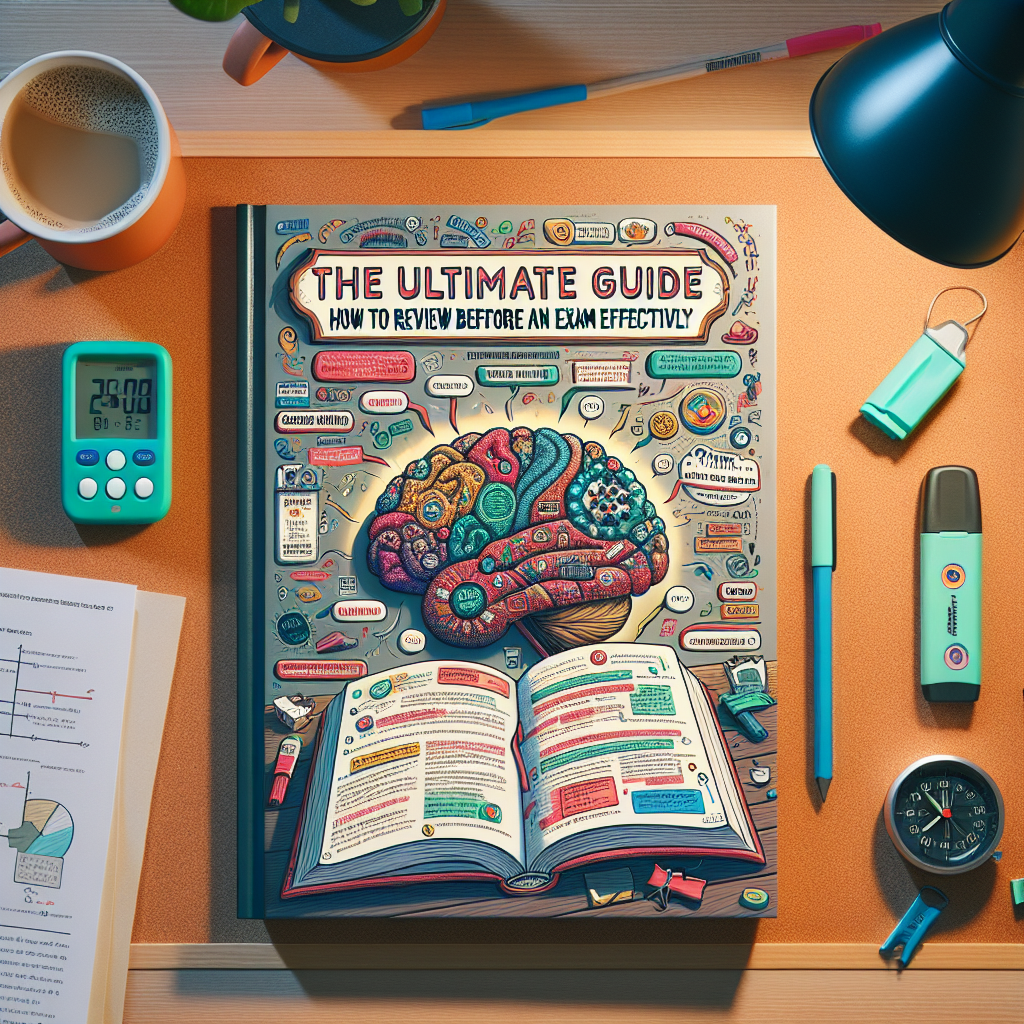
  • The Ultimate Guide: How to Review Before an Exam Effectively

    The Ultimate Guide: How to Review Before an Exam Effectively

    How to Review Before an Exam Guide

    Unlock your academic potential with this comprehensive guide on exam review strategies! Learn how to revise efficiently, manage your time, and approach your next test with confidence.

    Student reviewing notes before an exam with books and highlighters
    Prepare with purpose: Active reviewing helps boost memory retention and exam performance.

    Why Review Before an Exam?

    Reviewing before an exam is crucial for consolidating your understanding, identifying knowledge gaps, and boosting your confidence. Whether you’re preparing for finals, midterms, or standardized tests, dedicating time for systematic review can significantly improve your test scores and reduce anxiety. Research shows that strategic revision enhances long-term memory and aids in effective recall during high-pressure situations.

    Effective Planning for Exam Success

    1. Set Clear Goals: Define what you want to achieve with each review session. For example, “Understand all key concepts in Chapter 5” or “Practice 10 sample essay questions.”
    2. Create a Timetable: Allocate specific times for each subject or topic. Use planners or digital calendars to stay organized and ensure balanced coverage.
    3. Prioritize Weak Areas: Focus more time on subjects or topics where you feel less confident. Regularly assess your progress and adjust your plan as necessary.
    Colorful study planner and revision timetable for exam preparation
    Stay organized with a visual study plan to maximize your review sessions.

    Top Revision Techniques

    Incorporate a variety of evidence-based study methods for a well-rounded review:

    • Active Recall: Test yourself frequently with flashcards, quizzes, or practice questions to strengthen memory retention.
    • Spaced Repetition: Review material at increasing intervals to combat forgetting and reinforce learning.
    • Mind Mapping: Use diagrams to visually organize information and see connections between concepts.
    • Group Study: Collaborate with classmates to discuss challenging topics and gain different perspectives.
    • Summarization: Write concise summaries of your notes to distill key information and clarify complex ideas.
    • Past Papers: Practice with previous exam papers to familiarize yourself with question formats and time management.

    Tip: Mix and match study techniques to find what works best for you. Consistency and variety are key!

    Common Mistakes to Avoid

    • Last-Minute Cramming: Trying to learn everything the night before rarely leads to effective learning or retention. Start early!
    • Passive Reading: Simply reading notes or textbooks without engaging with the material is less effective than active review methods.
    • Ignoring Practice Questions: Familiarity with the exam format is essential. Practice under timed conditions to build confidence.
    • Neglecting Health: Lack of sleep, poor nutrition, and stress can all negatively impact your performance. Prioritize your well-being.

    Last-Minute Exam Preparation Tips

    If you’re short on time, don’t panic! Focus on high-yield concepts, make summary sheets, and review key definitions or formulas. Use mnemonic devices to remember complex information. Stay calm, avoid all-nighters, and ensure you get a good night’s sleep before the exam.

    Student using flashcards and mnemonic devices for quick revision before an exam
    Active recall and mnemonics can make last-minute revision more effective.

    Balancing Study and Self-Care

    Taking care of your body and mind is just as important as reviewing your notes. Incorporate short breaks, physical activity, and relaxation techniques into your study schedule. Don’t skip meals, stay hydrated, and practice mindfulness to manage exam stress. Remember, a healthy lifestyle supports optimal brain function and memory.

    • Take regular breaks (e.g., the Pomodoro Technique: 25 minutes study, 5 minutes break)
    • Engage in light exercise like stretching or walking
    • Get at least 7-8 hours of sleep
    • Practice deep breathing or meditation

    FAQs About Reviewing for Exams

    How far in advance should I start reviewing?
    Ideally, begin your review at least 2-3 weeks before the exam. This allows time for spaced repetition and in-depth understanding.
    How can I stay motivated during exam preparation?
    Set achievable goals, reward yourself for progress, and study with friends for accountability and support.
    What should I do the night before the exam?
    Review key points, avoid cramming, pack your materials, and prioritize rest to ensure you’re alert and focused during the test.

    Conclusion: Review Smart, Succeed Big!

    Mastering how to review before an exam is a skill that pays off throughout your academic journey. By planning effectively, using the best revision techniques, and balancing study with self-care, you can approach any test with confidence and clarity. Good luck!

  • The Ultimate Checklist for Studying with Flashcards Effectively: Tips, Strategies, and Best Practices

    The Ultimate Checklist for Studying with Flashcards Effectively: Tips, Strategies, and Best Practices

    Studying with Flashcards Effectively Checklist

    Flashcards are a time-tested, scientifically backed tool for active recall and spaced repetition—two of the most powerful learning techniques. Whether you’re preparing for exams, learning a new language, or mastering professional skills, using flashcards effectively can make your study sessions more efficient and productive. This comprehensive checklist will walk you through the best practices, design tips, and study strategies to maximize your learning with flashcards.

    Student using colorful flashcards for effective learning

    Why Use Flashcards for Studying?

    Flashcards help break down complex information into manageable, bite-sized pieces. They facilitate active engagement, trigger memory recall, and support spaced repetition—key factors in long-term retention. With the right approach, flashcards can boost your confidence and performance in any subject.

    Checklist: How to Study with Flashcards Effectively

    1. Set Clear Learning Goals
      Before you create or review flashcards, define what you want to achieve. Are you aiming to master vocabulary, memorize dates, or understand concepts? Clear goals help shape your card content and study sessions.
    2. Craft Concise, Single-Concept Cards
      Each flashcard should cover only one idea or question. This improves focus and makes self-testing more effective. Avoid cramming multiple facts onto a single card.
    3. Use Personalized, Memorable Content
      Write flashcards in your own words, using personal examples or mnemonics. This enhances understanding and recall.
    4. Incorporate Visuals and Associations
      Add drawings, diagrams, or symbols to your flashcards. Visual learning aids memory by linking information with images.
    5. Apply Spaced Repetition
      Review flashcards at increasing intervals—right after learning, then after a day, a week, and so on. Spaced repetition is proven to strengthen memory.
    6. Mix Up (Interleave) Topics
      Alternate between different subjects or types of information during study sessions. Interleaving challenges your brain and improves long-term learning.
    7. Test Yourself with Active Recall
      Look at the question side of a flashcard and try to recall the answer before turning it over. Active recall is more effective than passive reading.
    8. Track Progress and Difficult Cards
      Keep separate piles for cards you know well and those you struggle with. Focus extra time on the challenging ones.
    9. Update and Refine Regularly
      Add new flashcards as you learn more, and revise or remove cards you’ve mastered. Keeping your deck fresh maintains motivation and relevance.
    10. Study Consistently, Not Cramming
      Short, regular sessions with flashcards are more effective than marathon cramming. Aim for daily review to reinforce knowledge.

    Checklist for studying with flashcards effectively on a notebook

    Design Tips: Making Effective Flashcards

    • Keep Text Short: Use keywords, bullet points, and short phrases instead of long sentences.
    • Use Color Coding: Assign colors for different topics or concepts to make sorting easier and add visual interest.
    • Handwritten vs. Digital: Both have benefits. Handwriting can enhance memory, while digital apps offer convenience, audio, and built-in spaced repetition.
    • Include Pictures: Add relevant images to boost visual memorization—especially helpful for language learning and science topics.
    • Highlight Key Words: Emphasize essential terms or dates to draw your attention during reviews.

    LSI Keywords and Related Concepts

    To ensure your study routine covers all aspects of effective flashcard use, be familiar with these related terms:

    • Active recall techniques
    • Spaced repetition system (SRS)
    • Memory retention strategies
    • Flashcard study schedule
    • Self-testing methods
    • Personalized study aids
    • Retention improvement tips
    • Efficient study habits
    • Exam preparation with flashcards

    Digital and handwritten flashcards used for exam preparation

    Sample Flashcard Study Session Plan

    Here’s an example of how to structure your flashcard review session for maximum effectiveness:

    1. Warm up with 5 minutes of quick review of familiar cards.
    2. Spend 15-20 minutes testing yourself on new or difficult cards using active recall.
    3. Mix in cards from different subjects or topics (interleaving).
    4. Mark cards that are challenging and repeat them at the end of the session.
    5. Finish with a quick review of all cards, focusing on weak areas.

    Common Mistakes to Avoid

    • Making cards too detailed or cluttered
    • Ignoring the importance of regular review
    • Only reading cards instead of actively recalling answers
    • Not updating or replacing outdated cards
    • Relying solely on flashcards for concept-based learning (combine with other methods)

    Conclusion: Your Path to Mastery with Flashcards

    Using flashcards effectively requires more than just flipping cards—you need a strategy, consistency, and the right design. By following this checklist and integrating proven memory techniques, you’ll transform your study sessions and achieve lasting results. Remember, the key is to stay engaged, review regularly, and tailor your flashcards to your unique learning goals.